Sunday, April 17, 2011

Why Do the Wrong People Travel?

What do Lars von Trier, Franz Kafka and Mrs. Favell Lee Mortimer have in common? All three are Europeans who created works with a strongly slanted view of the United States without ever visiting here.

There are von Trier's didactic takes on America in the films Dancer in the Dark and Dogville. Kafka's surreal Amerika has been a favorite of mine since childhood.

Only this week have I discovered Mrs. Mortimer, an "Evangelical author of educational books for children". And, boy, did Mrs. Mortimer have her opinions. Though she rarely left her home, she wrote extensively through a very opinionated lens about the many countries of the world that are compiled in the book The Clumsiest People in the World: Mrs. Mortimer's Bad-Tempered Guide to the Victorian World.

Here's what she has to say about the U.S.:

"America is never spoken of in the Bible. One only savages lived in America; now there are very few savages, and a great many civilized people. Yet there is room for a great many more --for there are fewer people in America, in proportion to its size, than in any other quarter of the globe..."

And her views on China
"China is a heathen country; yet it is not a savage country, for the people are quiet, and orderly and industrious."

On Rome:
"Rome is the capital of Italy and once it was the capital of the world. It was a wicked city then, full of idols and cruelty -- and it is a wicked city now. Here the Pope lives. He is the chief of the priests of the Catholic religion."

Racism and bigotry are never a laughing matter, but Mrs. Mortimer's amazingly misinformed words are hard not to read without being just a little bit amused. It is a bit frightening that this woman was respected and well read in her day, and it probably speaks volumes about attitudes that were handed down from the Victorian era to the present.

Labels: , ,

Wednesday, April 13, 2011

From the Literary Giants Series

Reynaldo Hahn is hosted for tea by Marcel Proust in his cork walled parlor.

Labels: , , , ,

Sunday, November 07, 2010

MAGPIE TALE: The Lost Art of Poultry Photographic Portraiture

(Our contribution to this week's Magpie Tale community.)

When news began to spread in 1826 of Joseph Nicéphore Niépce's "View from the Window of Le Gras" -- believed to be the first photograph -- excitement swept Europe and the Western Hemisphere as enterprising souls realized that the implications of this new technology were infinite.

While kings, queens, prime ministers and other rulers would soon be sitting for their portraits, a more practical application began with arguably greater economic and social implications. By the early 1830s, livestock and barnyard animal photography was quickly emerging as one of the lesser known growth sectors of the Industrial Age. Though significant in Europe, in primarily agrarian United States and Canada, it proved to have even greater importance.
No studio held more prominence in the field than Oak Leaf Studio in Akron, Ohio. Founded in 1851 by the Mullgardt twins -- Hubert and Hobart, German immigrants who established themselves as photojournalists during the Mexican American war -- it soon gained a national reputation. After the war, they settled in Ohio and established Oak Leaf on Mulberry Avenue on the western edge of downtown Akron.
Similar studios had been established in Manhattan, Boston and Philadelphia. These urban technicians may have been more skilled with lenses and darkroom technique but lacked the Mullgardts' rapport with farmers and, more importantly, their feathered and furred subjects.

The Mullgardts captured many handsome images of stallions, goats, mules, mares and heifers. But it was their poultry work, especially their exquisite rooster portraiture, that built their reputation and was central to taking the poultry industry from being a village-to-village cottage industry to a national enterprise.

Before the arrival of Oak Leaf Studio, farmers were able to market their chicks and eggs mainly by line drawings or written descriptions. A farmer in Fresno would not likely buy several dozen hens from a distributor in Pennsylvania just because of faith in a glowing paragraph description, but seeing a handsome photographic image was all it took to convince and entice them to put the money down and have a flock sent by rail across the continent.

After a successful start in Akron, family tensions going back to Bavaria arose, and in 1860 Hobart left for Tennessee and later became second only to Matthew Brady in capturing the brutality of the Civil War. During Reconstruction, he opened a small studio in Knoxville called Oak Brook, but he specialized in wedding and holiday portraits that were never as magical of those of roosters and hens.

Hubert continued undaunted, passing on the business to his son Heinz and son-in-law Everett in 1882. Both Hubert and Everett died during the 1901 smallpox outbreak, but Heinz soldiered on, continuing to produce the most stunning poultry portraits in the Midwest. By the 1910s, he had opened up franchises in Fort Wayne, Moline, Pottsboro and Duluth.

Heinz's only heir, Trudi, continued the business until the 1950s when she sold it to the Ohio Agrarian magazine and it slowly began to lose much of its magic. Trudi was warmly remembered from the 1920s onward for her chicken dance at the annual Farmer-Stockman Ball in Columbus. Plans for a statue of her in central Akron have been discussed for years, but a benefactor has never emerged.

Labels: , , ,

Saturday, March 06, 2010

Sepia Saturday: A Child's Garden of Dysfunction

(Our weekly contribution to Sepia Saturday.)

"Somewhere along the delicate axis of fact and fiction, one discovers that odd curiosity we choose to embrace as 'truth'."
-- Clarissa Bernstein Ben Zvi Dunlap
(1894-1964)

Third wife of Dr. Q. Nestor Ben Zvi

Though virtually forgotten today, in the late 19th century and early 20th century Q. Nestor Ben Zvi was one of the most widely read authors and most sought after speakers of the era, reputedly having more readers and having given lectures to cumulatively larger audiences than those of Dickens, Twain and Darwin combined.

Granted, he never wrote a single volume intended for a mass audience, but his tomes intended for the industrial and academic sectors are considered to have been a key bridge between the European industrial revolution and the rise of the American assembly line and mass manufacturing. He further forged some of the leading theories on child psychology that many authorities feel are still embedded in the collective American psyche like a deep, glaring scar.
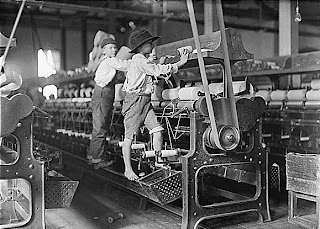
Born in Banja Luka, Herzegovina, in 1873, little Nestor joined his family who immigrated first to Denmark when he was 18 months and then to Baltimore where they lived for three years before his father established a small ale house on Hester Street while young Nestor and his 16 siblings toiled in a button factory where much of his psychological theory evolved through personal toil and triumph. By the age of 14 he rose to a shift manager, overseeing children aged five to eight and was praised by the upper management for his ability to maximize productivity while minimizing complaints, injury and lost limbs. By the age of 16 he published the first of his many pamphlets and soon was much in demand by other factory owners as a speaker on how to get the most out of waif and ragamuffin workers.
So impressed were these captains of industry, that they invited him to take their on own children. In 1896 he was appointed the head of collective corrections at the Finger Lakes Institute for Juvenile Mental Hygiene in Mount Kisco, New York. The Institute was funded by a circle of the East Coast's leading millionaires who were eager for Nestor to "fix" their naughty children. One of the unexpected by-products of the Gilded Age was -- despite the advance of wealth, electricity and indoor plumbing -- what these blue bloods considered to be barbaric behavior among their wee ones. In an era where children were meant to be seen and not heard, these decidedly vocal heirs to the New World were sent to Mount Kisco to be muted and corrected. The registry of family names was kept top secret, but as one anonymous nurse observed, "The pedigrees are so prestigious and the children's behavior so heinous that these are clearly the children of the wealthiest of first cousins or worse."

It was here that Nestor (who earned a dubious doctorate from the Trinidad Academy of Cultured Pearl Contemplation and Psychological Studies at age 22) was now known as Dr. Ben Zvi and developed some of his breakthroughs on child misbehavior management. While originally the children were housed in the various dormitories regardless of their place of origin, he soon observed a direct link between geography and dysfunction. There were the Beacon Hill Booger Eaters. Then it was discovered that the Institute had a wing of the Manic Masturbators of the Philadelphia Mainline. From out West, there were the Persistent Pimple Poppers of Pacific Heights. When grouped by location and ailment, Dr. Ben Zvi discovered that he was able to treat these ailments with greater efficiency and speed, closely echoing Henry Ford's assembly line. (He would later try to cure the Ford children's strident anti-Semitism.)

All was going along swimmingly until a Harper's writer, posing as a distant Cabot cousin, descended on the Institute, questioning Dr. Ben Zvi's methods and daring to name the names of the gilded register at the front desk. Although a healthy "stipend" managed to suppress the story, Dr. Ben Zvi and his patients were forced to flee to an obscure hacienda outside of Montevideo where they could be observed without intervention or judgment.

It was here that Dr. Ben Zvi began writing his masterwork as he started also receiving the children of Europe's crowned heads of state, Latin American and African colonialists and the entire brood of the King of Siam.

Published in 1908 with the names changed, A Child's Garden of Dysfunction was as captivating as it was bizarre. Written in a loose, lilting verse with strange line drawing of his subjects, it featured entries like this:

Puffy Priscilla of Pompei
Ate 90 cream horns every day
Weighing in at 30 stone
There was a lot of blubber on her bones

Icky Heinrich from
Düsseldorf
Chewed on hay just like a horse
When off to school he was called
He always came bucking from his stall

Wretched Rudolf from Monterery
Got great joy chewing razor blades
His bloody tongue and tortured jaw
Brought him looks of shock and awe

Though controversial and intended for a practitioner audience, the book was soon a huge hit, especially with children themselves who would memorize and sing the verses while playing ball or jumping rope. Dr. Ben Zvi was on his way back from a lecture tour of Europe when he perished on the Titanic in 1912. Ironically, he did not drown but was shot when caught trying to push his way to the front of a line of women and children trying to board a lifeboat.

Labels: , ,

Saturday, February 20, 2010

Sepia Saturday: The Merging of Fact and Fiction

(Our latest participation in Sepia Saturdays.
Be sure to check the link to other great posts.)


How much of our family history is fact, legend or pure fiction? I've learned that mine is a pretty wild mix of all of that, and some of the "narrators" of our family's journey have been of varying reliability. Yet, I know that there is some truth embedded in some of the most outlandish tales.

The above photo is of my maternal great grandmother Eva Bell Cheuvront Coddington Cain and her son Claude, taken around 1891 with her son Claude. Here are the facts that I do know about them. She was born ion Montreal in 1867, the eldest of five children. In 1886 she married a man named Frank Coddington and moved with him to Mankato, Kansas.
This is the only photo I know of them as a couple. Their son Claude was born in 1889. They divorced shortly afterward, one of the first in the young state's history. Why they divorced has always been murky, but my grandmother always described Frank as a man with a reputation of being "dangerously handsome and downright dangerous when he was angry, especially when he was drinking".
Being a divorced, single mother with a strong French accent, no alimony and hundreds of miles from home must have been a daunting prospect. But Eva took solace in her "little prince", books of Plato and Baudelaire and memories of home.
In 1900, she remarried a man many years her senior, Maurice Cain, who had also arrived on the US prairie from Quebec. Together they built a new life that included my grandmother and three other children.

Being a dozen years older than the new brood of children, Claude apparently always felt in an awkward role but was especially admired by the three women of the household, and I always heard stories of his amazing singing voice and love of poetry and art. Sadly, none of his work was ever passed down through the family. My grandmother spoke of his dreams of going to New York or even Europe, but he only got as far as Kansas City where he worked as a streetcar conductor until dying suddenly at the age of 29. It was an event that forever shattered Eva. When my mother looked at the photos of the beautiful, poised young Eva in Victorian finery, my mother said it was hard to recognize her as the grandmother she knew -- a hunchbacked woman with goitre, half her teeth missing and smoked a corn cob pipe. Years of hard farm work and dashed dreamed took their toll on her.
My grandmother and her sister would sometimes speak of Claude in hushed tones, his life as what they termed a "confirmed bachelor" and the night he drowned in the Missouri River. As a child, I always wondered why he would go swimming at night. Only towards the end of her life did my grandmother share that he jumped into the river but would then refuse to share more details. When I pressed for answers, she would either turn silent or my parents would tell me that I was being rude.

My instincts and imagination have filled in what I think might have been Claude's story. I don't know how much is fact and how much is fancy. I've long wondered why I he has held such a fascination for me. Other ancestors have had more heroic or dramatic histories. In fact, he is only my "grand half uncle" though I can see a shared bloodline when I gaze on his face in the above portrait of him in his uniform. There is a familiar mix of grace, arrogance, melancholy and longing for what is beyond the immediate horizon. Was he composing a sonnet in his head as the shutter snapped or dreaming of what was beyond the flat Kansas landscape, envisioning himself dancing somewhere in a salon in Paris?

What is most perplexing is that I think I may be the only living person who knows that Frank ever existed or possesses photos of him. Even my sister, who is dedicated to preserving family history, can't remember hearing stories about him. I've asked extended family members about him, and they don't even seem to know that our great-grandmother had a first marriage.
The video below is something I created a few years ago, my imagining of what Claude's story may have been. I know that I probably got several of the facts incorrect (he died in 1918 not 1912 as stated in the video and some of the names are changed), but I hope it honors the truth of his life. I want to believe that this lost soul is not forgotten and that the sweet young prince that brought solace to his mother more than a century ago left behind a wisp of poetry on the prairie, still floating in the cornfields of the sunflower state.

Labels: , , , ,

Monday, January 18, 2010

Mr. Sullivan Regards His Own City

Few things thrilled Louis Sullivan more than strolling his own city and regarding the buildings that he had created. These massive, muscular fingers reaching towards the sky had been created by his one virile yet elegant digits.
Sometimes it seemed Sullivan got as much pleasure from observing these enormous poems of granite, glass and steel reaching for the heavens, noticing how the light of late afternoon bathed them in warm hues as they looked down on the unimaginative flatness of the prairie.
What had not been among Sullivan's strengths was ventilation. And his top floor office could be deadly overheated in the late summer afternoons.
To find relief he would often sit on top of the building, sipping a chocolate milk and regarding the city below. It was a nurturing and relaxing ritual that, none-the-less, irked the ire of his partner Adler who seeing Sullivan perched on the roof called his Viennese headshrinker
"Sullivan, Sullivan! Don't do it. Don't jump," pleaded Dr. Baumgartner.

"I've no intention of jumping."

"What's bothering you, Sullivan. You can tell me."

"You, Baumgartner. Nothing is bothering me but you.

Labels: , , ,

Tuesday, August 05, 2008

In Praise of History

Something about New York history always brings me comfort when I am on a long work-related trip. Thus I am reading Edith Wharton's lovely Old New York, four novellas covering the mid-19th century, and listening to back episodes of the Bowery Boys podcasts. If you've never visited the boys' (Tom and Greg) blog, they have some great gems on it, and their podcasts are on iTunes. They are very cute and endearing in a bookish, history nerd way. I should look them up when back in Manhattan.

Labels: , , ,

Friday, July 25, 2008

Happy 150th Central Park

Be sure to check the ongoing tributes by the Bowery Boys.

Labels: , , ,